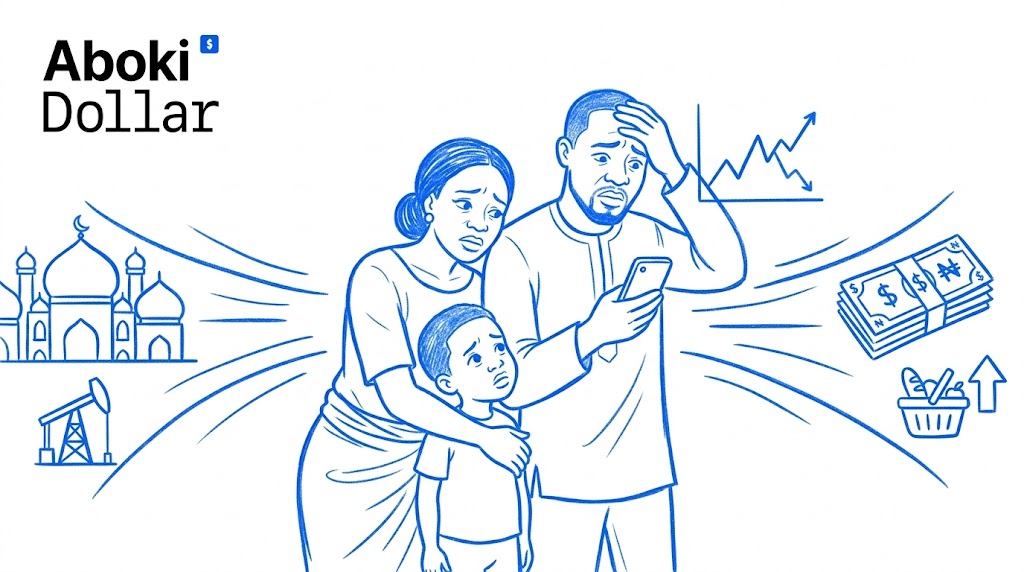
Middle East Crisis Impact on Nigeria: Rising Fuel Prices, Inflation & Naira Pressure Explained
What feels like a distant geopolitical conflict is already hitting home in Nigeria. Rising tensions involving global powers are quietly reshaping everyday life—from fuel stations to food markets.
Across the country, transport fares are climbing, food prices are jumping, and household budgets are getting tighter. For many Nigerians, this is not just news—it’s real, daily pressure.
If you’re trying to keep up with how these global shifts affect your money, it’s important to track both the official exchange rate and the black market rate in Nigeria.
Fuel Prices Surge and Trigger a Chain Reaction
One of the fastest ways global tensions show up locally is through fuel prices.
Earlier this year, petrol sold for around ₦840 per litre. Today, prices are hovering close to ₦1,300 per litre. That jump alone has pushed up transportation costs, delivery fees, and ultimately, the price of everyday goods.
Once fuel rises, everything else follows. Traders, transporters, and small businesses all adjust prices just to stay afloat.
Food Prices Are Rising Fast
The impact is even more visible in food markets.
- Tomatoes jumped from ₦41,000 to about ₦60,000 per basket
- Fresh pepper increased from ₦46,000 to ₦80,000
- Small retail portions have risen by over 100%
Reports from BusinessDay Nigeria confirm that traders are struggling to keep prices stable while still making a profit.
For households, this means spending more just to maintain the same standard of living.
What This Means for the Naira
As inflation rises, the value of the Naira comes under pressure. When import costs increase and demand for foreign currency grows, exchange rates often follow.
If you want to see how much your money is worth in real terms, you can check:
These tools help you understand how quickly exchange rates are shifting.
The Oil Windfall Paradox
There’s an interesting twist to all this.
When global tensions rise, oil prices usually increase. For an oil-producing country like Nigeria, that should mean more revenue.
According to the Nigerian Economic Summit Group (NESG), Nigeria could earn trillions of naira in additional oil revenue if high prices continue.
But here’s the reality: while government earnings may rise, everyday Nigerians still face higher living costs.
That gap is where the real challenge lies.
How Other Countries Are Responding
Many countries are actively protecting their citizens from rising energy costs:
- India is reducing fuel taxes and expanding subsidies
- France is capping electricity prices
- Indonesia is combining subsidies with direct cash support
Nigeria, however, is currently relying more on market forces after removing fuel subsidies.
What Experts Say Nigeria Should Do
Economists generally agree that going back to full fuel subsidies may not be sustainable. It could cost trillions and strain public finances.
Instead, targeted support is seen as a better option.
Expanding cash transfers to vulnerable households through existing programs could provide faster relief without reversing reforms.
Pressure on Small Businesses
Small businesses are feeling the squeeze the most.
Higher fuel costs mean:
- More expensive production
- Increased delivery costs
- Lower profit margins
Many business owners are stuck between raising prices and risking customer loss.
What to Watch Going Forward
If global tensions continue, Nigerians should expect:
- Continued pressure on fuel prices
- Rising food inflation
- Volatility in exchange rates
Staying informed is key. You can follow daily updates and analysis on Bureau De Change news.
Conclusion
Global events are no longer distant—they directly shape daily life in Nigeria.
From fuel prices to food costs and exchange rates, the effects are already being felt across the country.
How Nigeria responds in the coming months will determine whether these pressures ease or deepen.
For now, keeping track of exchange rates and economic trends is one of the smartest ways to stay ahead.