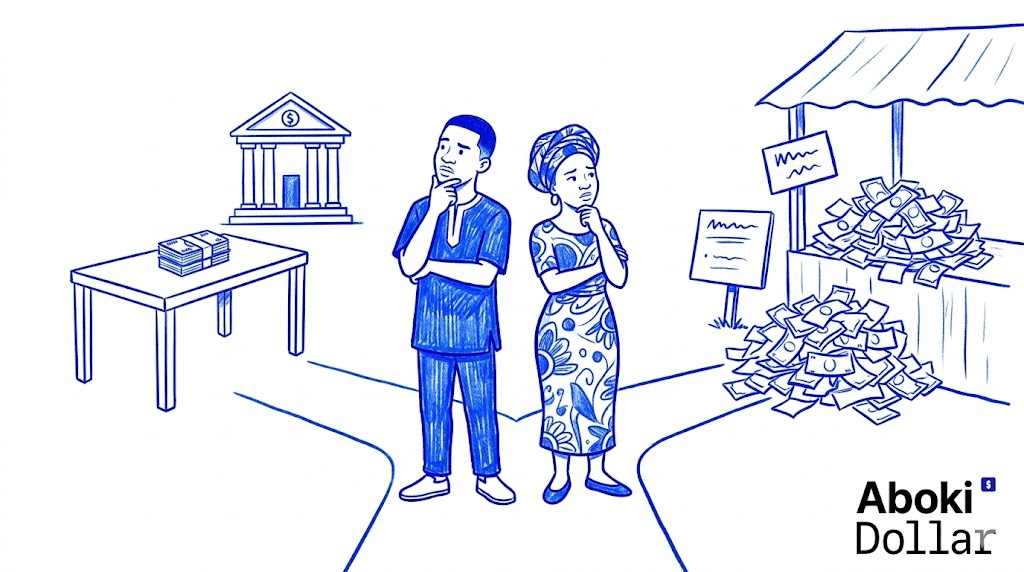
Black Market vs CBN Rate in Nigeria: Which One Should You Use? (2026 Guide)
If you’ve ever tried to exchange dollars in Nigeria, you’ve likely come across two different rates—and the difference between them can be confusing.
One is the official rate from the Central Bank, and the other is the black market rate you’ll hear from Bureau de Change operators or street traders.
So which one should you actually use?
Let’s break it down in a simple way so you can make the best decision for your money.
What Is the CBN (Official) Exchange Rate?
The official exchange rate is set within the regulated financial system.
It is used by:
- Banks
- Government institutions
- Large corporations
You can track it daily on the CBN exchange rate page.
This rate is more stable and controlled, but it is not always easily accessible to individuals.
What Is the Black Market Rate?
The black market, also known as the parallel market, operates outside the formal banking system.
Rates here are determined by demand and supply in real time.
You can monitor live updates on the dollar to naira black market rate page.
Because it reflects actual market demand, the black market rate is often higher than the official rate.
Key Differences Between Black Market and CBN Rates
| Factor | CBN Rate | Black Market Rate |
|---|---|---|
| Access | Limited | Easy |
| Price | Lower | Usually higher |
| Regulation | Controlled | Unregulated |
| Speed | Slower | Faster |
Which One Gives You More Naira?
In most cases, the black market rate gives you more naira for your dollars.
For example:
- If you convert $100 to naira at the official rate, you may get less
- At the black market rate, the same $100 could give you significantly more
This difference is why many individuals and small businesses prefer the parallel market.
When You Should Use the CBN Rate
The official rate is best suited for:
- Large corporate transactions
- Importers with bank access
- Government-related payments
It offers stability and security, especially for high-value transactions that require documentation.
When You Should Use the Black Market
The parallel market may be more practical if:
- You need quick access to foreign currency
- You’re receiving remittances
- You want higher naira value
However, always deal with trusted Bureau de Change operators to reduce risk.
Risks to Be Aware Of
Each option comes with its own risks:
- CBN Rate: Limited access and possible delays
- Black Market: Potential scams and price volatility
Understanding these risks helps you choose wisely based on your situation.
How to Make the Right Choice
There’s no one-size-fits-all answer. The best option depends on your needs.
- Need safety and documentation? Use official channels
- Need speed and better rates? Consider the black market
Before making a decision, compare rates using the currency converter.
Stay Updated with Daily Rates
Exchange rates change constantly, so staying informed is key.
You can follow daily updates and trends through Bureau De Change news.
For broader financial insights, platforms like Nairametrics also provide regular economic updates.
Conclusion
The difference between the black market and CBN rate comes down to access, value, and risk.
While the official rate offers stability, the black market often provides better value for everyday transactions.
Understanding both gives you an advantage, especially when dealing with foreign currency regularly.
To stay ahead, track real-time rates and market movements on Aboki Dollar.